
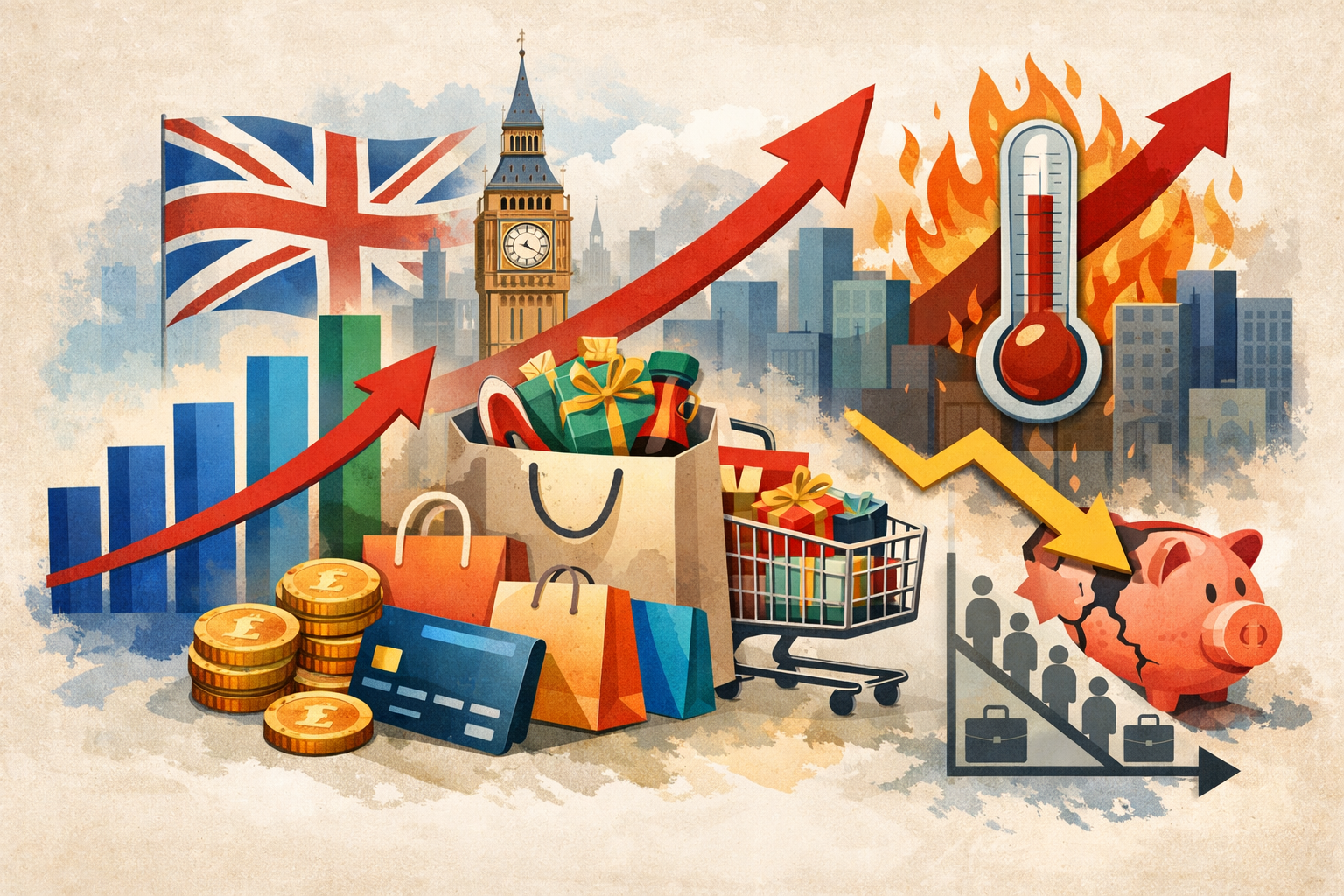
Britain’s economy is showing clearer signs of life after months of uncertainty, with business confidence improving and consumers becoming slightly less pessimistic.
The shift follows finance minister Rachel Reeves’ annual budget statement in November, which came at a time when households and employers were still adjusting to weak growth and stubborn price pressures.
Surveys published last week suggested January was the best month for businesses since before Keir Starmer became prime minister in July 2024.
Consumer confidence also moved higher, reaching its strongest reading since August last year.
Official data added to the brighter tone, with retail sales volumes rising in December at the fastest annual pace since April.
Still, Britain’s recovery remains uneven. The labour market continues to look subdued, partly linked to a payroll tax increase introduced by Reeves last year.
Inflation remains higher than in other major advanced economies, leaving the UK with the strongest price pressures among the Group of Seven.
Business bounce-back gains attention
Business surveys have been one of the strongest signals that the economy is stabilising. Purchasing managers’ index data showed the fastest upturn in activity this month since April 2024, led by services firms.
Factories also reported improving conditions, with order books expanding at the quickest pace in almost four years.
The rebound stands out after a long stretch of hesitant investment decisions, slower demand, and tight cost control. Services activity has been particularly important, given its weight in the UK economy.
For manufacturers, the improvement in order books suggests demand is no longer as weak as many companies feared.
However, analysts have warned against assuming the jump in confidence will last.
Despite January’s rise, the S&P Global Purchasing Managers’ Index remains below its pre-COVID average under Starmer, showing that activity is still not fully back to the levels that were normal before the pandemic and the subsequent economic shocks.
Consumers turn slightly more positive
Consumers are still cautious, but some indicators suggest sentiment is beginning to shift. GfK’s consumer confidence index edged higher again this month, reaching its best level since August 2024.
That improvement hints that households may be feeling less anxious about spending decisions compared with late 2024.
Other measures, though, tell a different story. S&P Global said its shorter January survey showed consumer sentiment slipping to a nine-month low.
The contrast highlights how fragile confidence remains, and how quickly attitudes can change if households sense rising costs or job insecurity.
Spending data has also been mixed. Official figures showed retail sales volumes rose unexpectedly in December after weak results in October and November.
The increase was the fastest annual pace since April, offering some reassurance that demand held up heading into the end of the year.
Yet softer readings elsewhere suggest the recovery in spending may not be broad-based.
Some major retailers have reported underwhelming end-of-year sales, underlining that consumers are still selective, particularly for discretionary purchases.
GDP surprise adds to improving signals
Britain’s output data also delivered a stronger-than-expected reading late last year. The economy grew by 0.3% in November, marking the fastest monthly rise since June.
The figures surprised economists and offered more evidence that growth momentum was stronger than expected ahead of the new year.
Part of the boost came from Jaguar Land Rover returning to full production after a cyberattack disrupted activity earlier. The rebound in output helped lift manufacturing performance and contributed to the overall rise in GDP.
Stronger-than-expected services activity also played a role, once again highlighting how the services sector is often the key driver for UK economic performance.
While one month’s data does not set a clear trend, the November reading suggests the economy was more resilient than many indicators had implied in the second half of 2024.
Inflation and hiring remain weak spots
Despite improved activity signals, inflation remains a persistent challenge.
Consumer price growth rose more than forecast to 3.4% in December, keeping pressure on household budgets and complicating the wider economic picture.
The UK continues to record the highest inflation among the G7, reinforcing why cost-of-living pressures remain central to economic and political debate.
Inflation is expected to slow sharply in the coming months. Bank of England Governor Andrew Bailey has said it is likely to be close to the central bank’s 2% target by April or May.
However, not all policymakers share the same level of comfort.
Megan Greene said on Friday she remained concerned about lingering wage-driven inflation pressures, a factor that could keep price growth elevated for longer.
The labour market, meanwhile, is showing little sign of improvement.
The number of payrolled workers fell in December by the most since November 2020, although similar early estimates during that period were later revised upwards.
Even so, the latest drop has added to concerns that hiring demand is weakening.
Business surveys point in the same direction. The PMI data showed employers remained wary about recruitment, with employment in the services sector declining at a faster rate in January than in December.
This suggests that while business output and confidence may be improving, companies are still cautious about committing to new staff as costs remain high and demand remains uncertain.
The post Business confidence lifts UK economy as inflation and jobs remain a worry appeared first on Invezz