
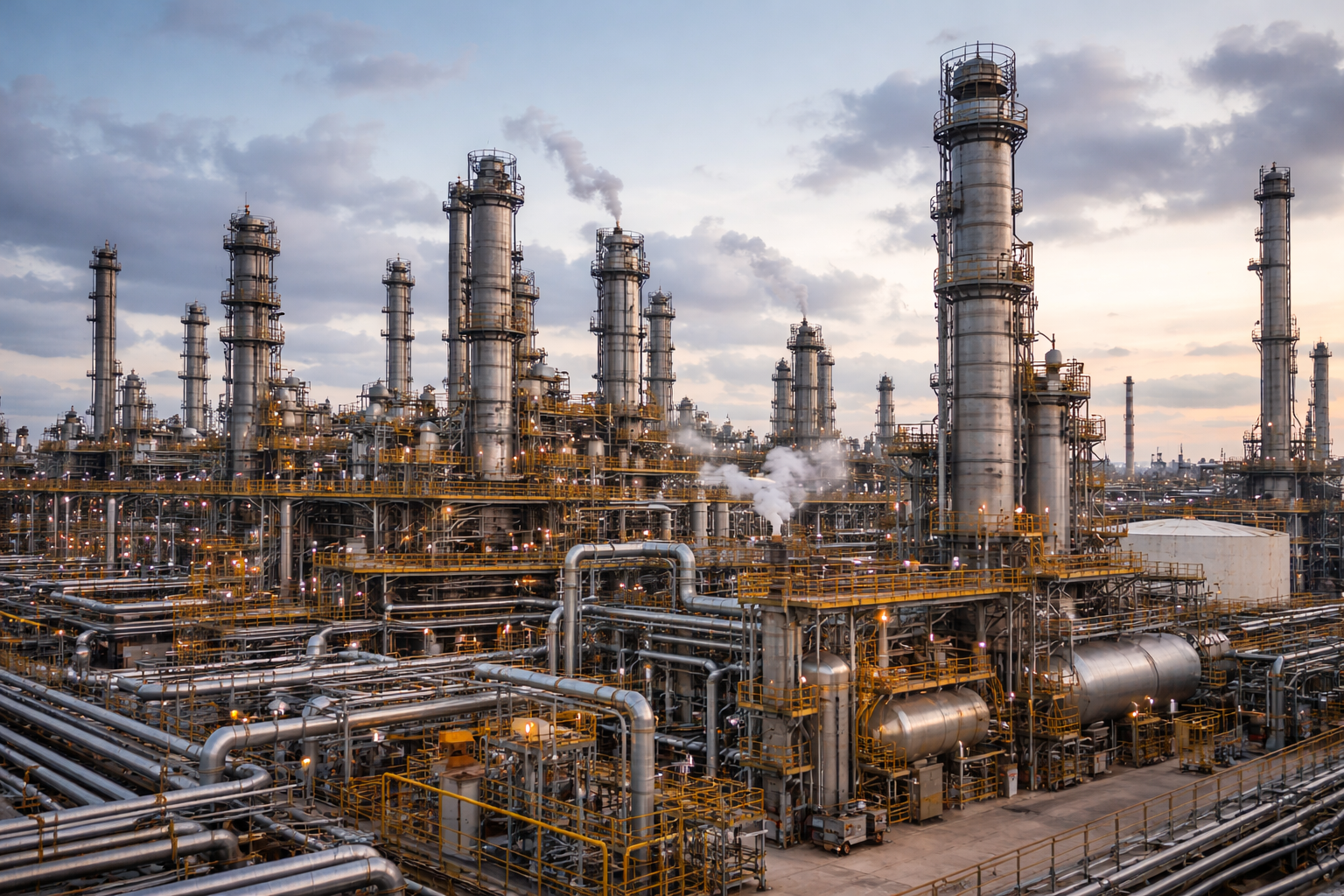
US Gulf Coast refiners are benefiting from some of the strongest margins in years, as disruptions to Middle Eastern oil flows during the Iran conflict boost global demand for American fuel exports.
The supply shock—triggered by Iran’s blockade of the Strait of Hormuz—has hit Asian and European refiners particularly hard, forcing some to scale back production.
In contrast, US refiners have been able to ramp up output and capitalize on tightening global fuel supplies.
Although Donald Trump announced a two-week ceasefire agreement with Iran, uncertainty remains over its durability, with tanker traffic through the Strait still limited and doubts lingering over whether the truce will hold.
Gulf Coast refiners gain export advantage
US refiners are uniquely positioned to benefit from the disruption, thanks to their limited reliance on Middle Eastern crude and their proximity to export infrastructure.
The United States, the world’s largest fuel market, has roughly 18 million barrels per day of refining capacity, much of it concentrated along the Gulf Coast.
Major independent refiners such as Marathon Petroleum, Phillips 66, Valero Energy, and PBF Energy are benefiting from their access to marine export terminals and pipeline networks.
“US refiners have the upside opportunity of selling into markets facing scarcity, while not having to suffer any meaningful disruption to their own feedstock supply,” said Jeff Krimmel, founder of consulting firm Krimmel Strategy in a Reuters report.
Refinery utilization rates highlight the divergence. US Energy Information Administration data shows US utilization climbed to nearly 92% last month, with Gulf Coast facilities operating above 95%, compared to a five-year seasonal average of about 82%.
By contrast, Asian refinery utilization has slipped to the low-to-mid 80% range following production cuts, according to Rystad Energy.
Export surge lifts margins and fuel prices
The disruption has driven a surge in US refined product exports, which hit a record in March, according to ship-tracking data. This has significantly boosted refining margins after a period of global oversupply.
Tighter fuel markets are also pushing up domestic prices. Diesel and jet fuel markets have been particularly affected, given the Middle East’s role as a key supplier.
US ultra-low sulfur diesel futures are trading at a premium of more than $72 per barrel over West Texas Intermediate crude, up sharply from about $40 before the conflict.
Gasoline futures have also widened, reaching a near $26 premium compared to around $18 previously.
“Strength in global diesel markets is expected to pull barrels from the US Gulf Coast, ultimately contributing to further upward pressure on domestic prices,” said Alex Hodes, director of energy market strategy at StoneX..
Rising crude costs temper gains
Despite the windfall from higher export demand, US refiners are not entirely insulated from rising crude costs.
Increased global competition for supply has pushed feedstock prices higher, compressing some of the margin gains.
Spot premiums for West Texas Intermediate crude have surged to record levels. Offers for WTI Midland crude to North Asia for July delivery have risen to $30–$40 per barrel above benchmarks, compared to around $20 in late March.
European bids have also climbed, reaching nearly $15 per barrel over dated Brent.
Meanwhile, Asian refiners are competing for South American crude shipments that traditionally flowed to the United States, further tightening supply dynamics.
Phillips 66 recently reported nearly $900 million in pre-tax mark-to-market losses in the first quarter due to rising commodity prices impacting hedges.
“Because oil prices rose, Phillips 66 takes a hit on the value of its hedges. But they’ll get a serious gain as they sell more and more refined products into a market with elevated product prices,” Krimmel added.
As geopolitical tensions persist and supply disruptions continue, US refiners appear well positioned to capitalize—though their gains will remain closely tied to volatile global energy markets.
The post Why US refiners are cashing in as Iran war disrupts oil flows appeared first on Invezz