
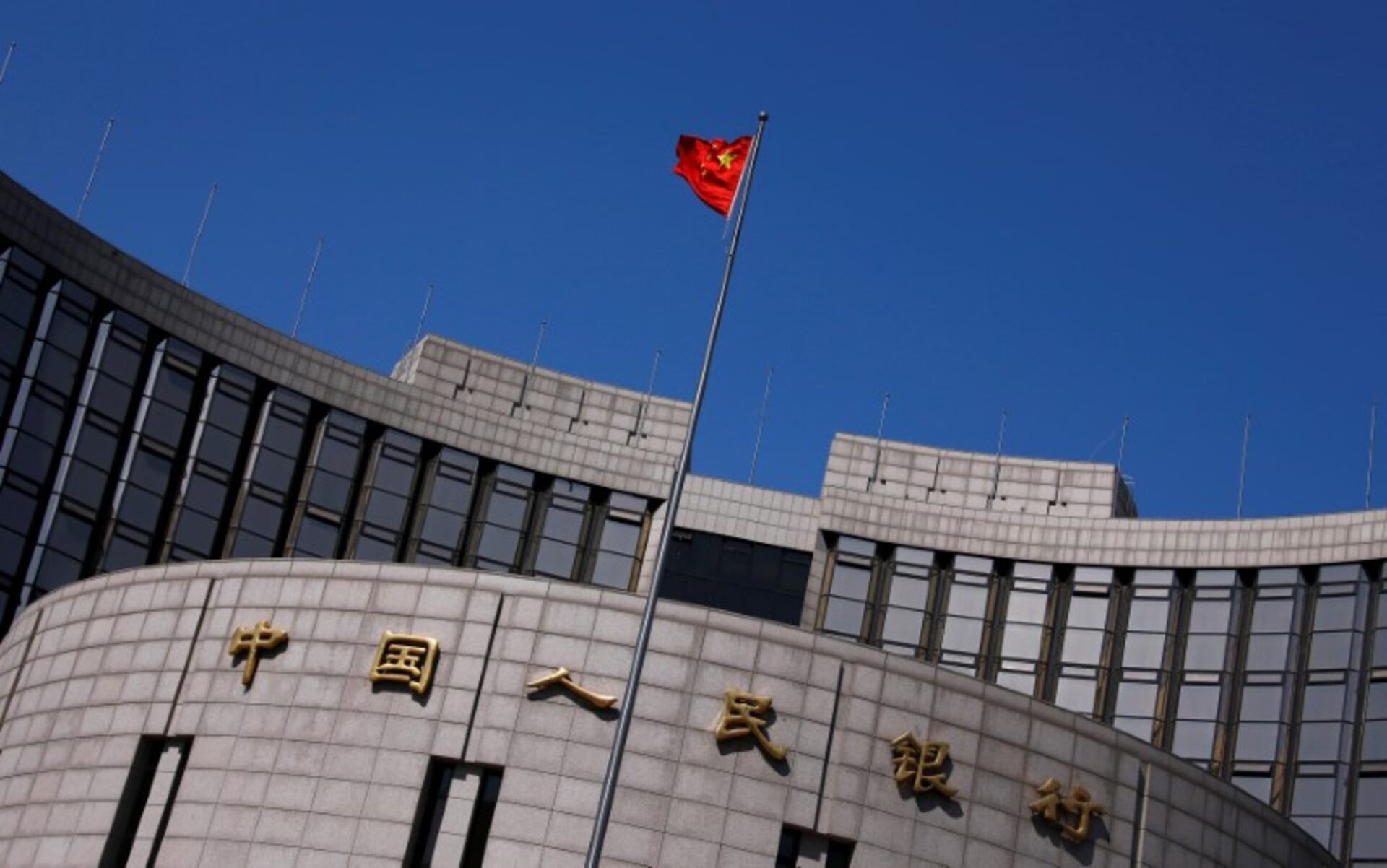
Major global banks have revised their expectations for China’s monetary policy, now largely ruling out interest rate cuts for the year.
The shift comes as recent economic data points to stabilisation in the world’s second-largest economy.
Geopolitical tensions involving Iran appear to have had limited influence on China’s outlook.
Earlier projections had pointed towards potential rate adjustments, but banks had already begun lowering expectations for rate hikes.
Resilience amid global uncertainty
Despite global uncertainties, China’s economic performance has shown relative strength.
Analysts suggest that while neighbouring economies have faltered.
China’s resilience and early signs of recovery have reduced the urgency for monetary easing.
Strong investor appetite and improving domestic conditions could further diminish the likelihood of interest rate cuts in the near term.
Banks pull back rate-cut forecasts
Goldman Sachs no longer expects a policy rate cut this year, a China economist at the bank said on Wednesday.
“China’s relative resilience amid Hormuz disruptions, better-than-expected activity data in January–February, and the producer price index (PPI) likely turning positive in March, we see no clear catalyst for a policy rate cut in 2026,” said Xinquan Chen, a China economist at Goldman Sachs.
In addition, Goldman Sachs adjusted its quantitative easing outlook.
“We therefore remove our call for a 10-basis-point (bps) rate cut in the third quarter from our baseline,” the analyst added.
Australian lender ANZ also revised its outlook, stating that since China’s growth remains “within target,” it no longer expects rate cuts “in both 2026 and 2027.”
Limited impact from Middle East tensions
Economists believe that geopolitical tensions in the Middle East are unlikely to significantly affect China’s economic trajectory.
Shuang Ding, head of Greater China and North Asia economic research at Standard Chartered, said that Middle East conflicts may have a limited impact on China compared with other economies.
The researcher was quoted in a Reuters report as saying that China has “effectively ruled out the possibility of interest rate cuts (for now), and there is no need for interest rate hikes in the short term.”
China’s substantial reserves of oil and natural gas are also seen as a buffer, even as the country continues to face deflationary pressures.
Policy stance signals continued liquidity support
China’s central bank has indicated it will maintain an “appropriately loose” policy stance to support economic growth.
Despite a recent policy rate increase to 6.5% in June, short-term market rates remain subdued.
The trade-weighted overnight repo rate continues to hover near a three-year low, while the seven-day repo rate remains below the benchmark interest rate.
Market focus shifts
With rate cuts now seen as unlikely, attention is turning to alternative policy tools.
Analysts expect policymakers to rely more on liquidity injections rather than benchmark rate adjustments to support economic activity.
Recent developments, including a reported two-week ceasefire between the United States and Iran, have also helped ease global market concerns.
Meanwhile, markets will closely monitor upcoming consumer and manufacturing data.
These measures could play a key role in maintaining credit stability as China’s economy continues to navigate a “muddling along” growth phase.
The post China likely to hold interest rates steady in 2026 appeared first on Invezz