
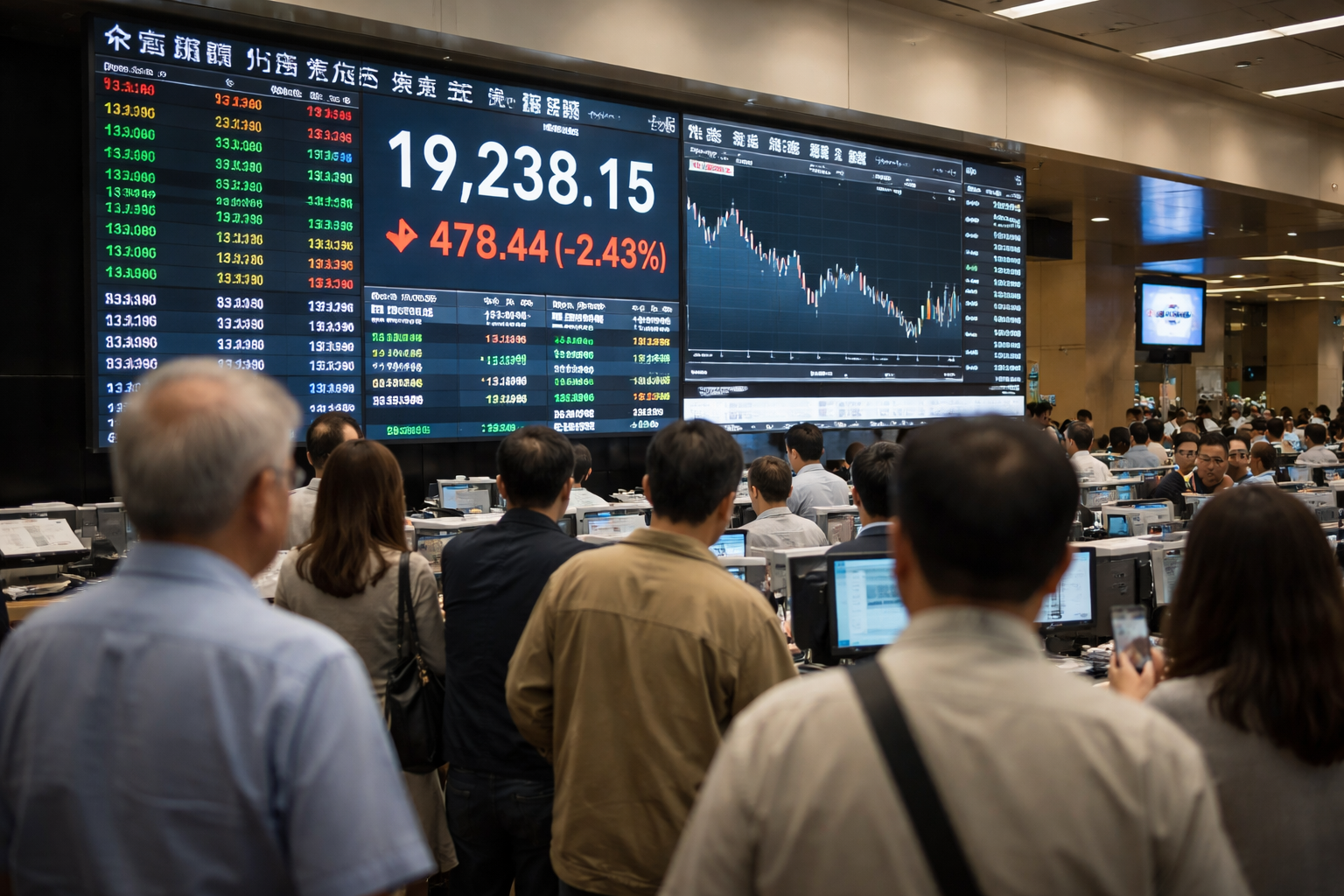
The Hang Seng Index staged a cautious recovery this week as the United States and Iran announced a ceasefire that reduced the ongoing tensions. It formed a gap up to $25,887, its highest point since March 18 and 6.8% above the lowest level in March.
Hang Seng Index rises as geopolitical tensions ease
Hong Kong shares jumped this week as investors reacted to the ceasefire between the US and Iran, which will likely lead to the reopening of the Strait of Hormuz, where 20% of the world’s oil passes through.
The main challenge for the ceasefire, however, is that Israel has continued to violate it by launching the heaviest bombardment in Lebanon on Wednesday. Israel’s leaders have maintained that the happenings in Lebanon were not part of the ceasefire.
As a result, there are reports that Iran has closed the Strait of Hormuz, which explains why crude oil prices have risen modestly. US stock futures are also falling after soaring by over 2% on Wednesday.
Still, the likely end of the war will be bullish for the stock market in Hong Kong and of countries as it will remove the tensions that have remained in the past few months.
Meanwhile, there are signs that Hong Kong companies are highly undervalued compared to those in other places. Bloomberg data shows that the index has a price-to-earnings ratio of 13.5, while that by CEIC places the multiple at 13.7.
In contrast, the FTSE 100 Index has a multiple of 17, while the S&P 500 Index has a multiple of 20.
The main reason why the Hang Seng’s valuation multiple has dropped is that some of the biggest technology companies in the index are struggling amid concerns about the artificial intelligence growth.
For example, Alibaba stock has dropped by 16% in the last three months. Similarly, Tencent, the biggest company in the index, has slipped by 16.7% in the same period.
Xiaomi has tumbled by over 15%, while top names like BYD, Trip.com, Semiconductor Manufacturing Corporation, and JD Health have plunged by over 20%.
On the other hand, some of the top gainers in the last 3 months are companies like Geely Automotive, Sun Hung Kai Properties, PetroChina, and JD Logistics.
Hang Seng technical analysis
HSI Index chart | Source: TradingView
The daily timeframe chart shows that the Hang Seng Index peaked at $27,960 in January this year to a low of $24,225.
It has now rebounded to $25,800, which is along the 100-day Exponential Moving Average (EMA).
The index has settled at the Strong, Pivot, Reverse level of the Murrey Math Lines tool at $25,780.
Therefore, the index will likely remain under pressure in the near term, potentially to the Ultimate Support level of $25,000, down by 2.85% from the current level.
On the flip side, a move above the 100-day moving average will point to more gains, potentially to Major S/R pivot point at $26,560.
The post Hang Seng Index at risk as US-Iran ceasefire risks remain appeared first on Invezz