
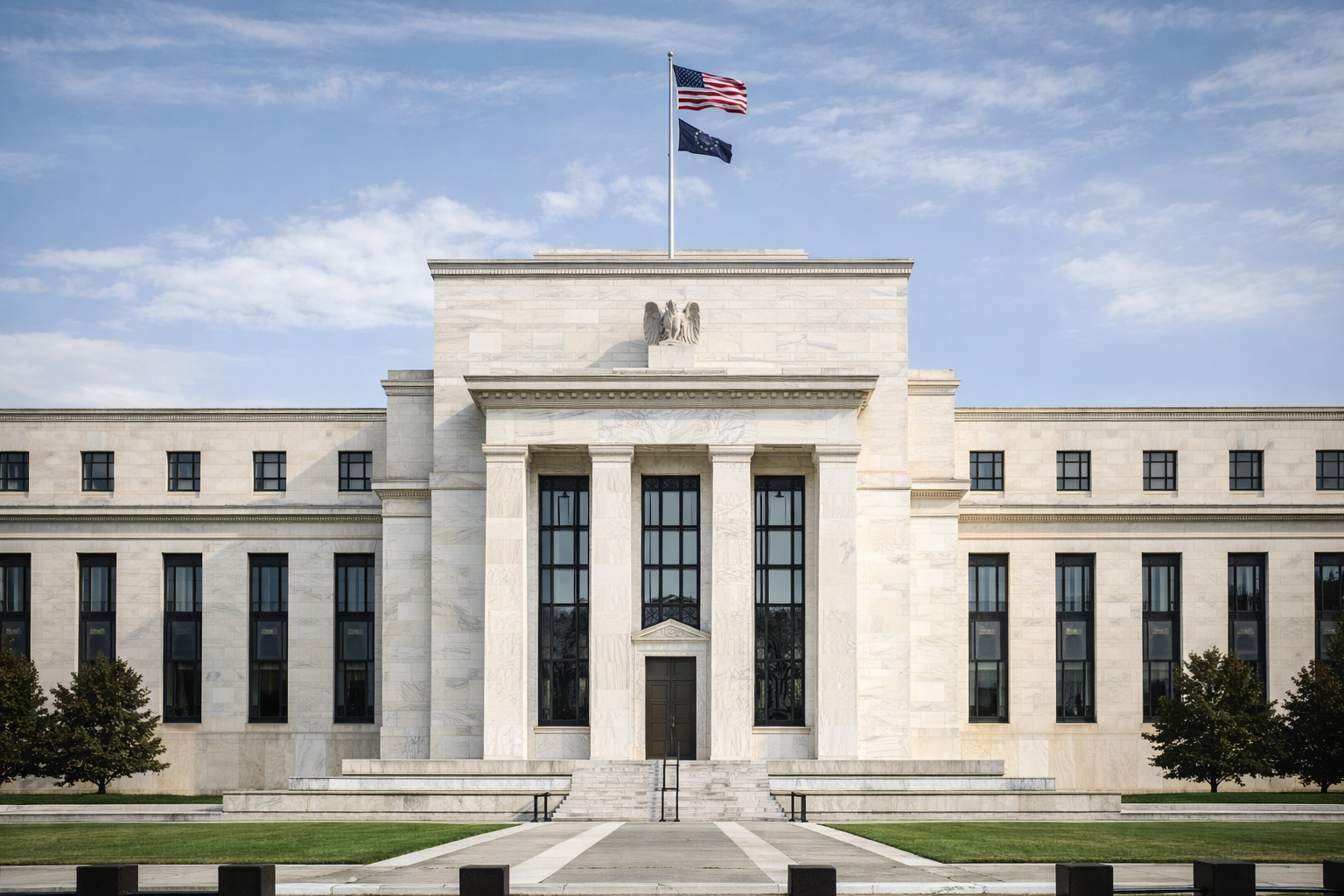
Nomura no longer expects the Federal Reserve to cut interest rates in 2026, marking a hawkish shift from its earlier view that the central bank would deliver two reductions later in the year.
The brokerage had previously forecast two 25-basis-point cuts, one in September and another in December.
In a note dated May 21, however, Nomura said higher inflation readings and waning support among Fed officials for easier policy had prompted it to abandon that call.
The change underscores how sticky inflation and cautious central bank commentary are reshaping expectations for US monetary policy.
Instead of a gradual return to easing, Nomura now sees 2026 as a year in which the Fed is more likely to keep rates on hold.
Inflation keeps pressure on the Fed
Nomura said the inflation backdrop had become less supportive of rate cuts.
Recent price data have made it harder for policymakers to argue that inflation is moving decisively back towards target.
That matters because the Fed has repeatedly signalled that it needs greater confidence on inflation before lowering borrowing costs.
If price pressures remain elevated, rate cuts risk loosening financial conditions too early and undermining the central bank’s inflation-fighting credibility.
The firm also pointed to reduced support for easing among Fed officials. That suggests the bar for cuts has risen, even if growth slows or financial markets begin to price in looser policy.
For investors, the shift reinforces the idea that the Fed’s reaction function remains heavily dependent on inflation.
Stronger or stickier price readings may keep policymakers cautious, while only a clearer cooling trend would revive the case for rate reductions.
Warsh seen unlikely to win FOMC majority
Nomura had earlier based part of its easing forecast on the assumption that incoming Fed Chair Kevin Warsh would favour rate cuts.
But the firm now doubts he would be able to convince a majority of the Federal Open Market Committee to support that path.
“Higher inflation readings and waning support among Fed officials for easing motivate our previous call of rate easing by incoming Fed Chair Kevin Warsh,” Nomura said in the note.
“But recent data and Fedspeak make us sceptical that he will be able to convince a majority of the FOMC to go along with rate cuts in 2026.”
The comment highlights the importance of consensus within the FOMC.
Even a chair inclined towards easier policy would need support from voting members, especially if inflation remains above levels consistent with the Fed’s mandate.
A hold year for US monetary policy
Nomura’s revised outlook effectively frames 2026 as a hold year for US monetary policy.
That would mark a significant change from expectations of late-year easing.
Under the previous forecast, the Fed would have delivered a modest adjustment through two quarter-point cuts.
The new view suggests policy may remain restrictive for longer, with officials waiting for stronger evidence that inflation is under control.
A prolonged hold could support the US dollar and Treasury yields, while weighing on rate-sensitive assets such as equities, housing and parts of the credit market.
It could also complicate the outlook for emerging markets, where higher US rates tend to tighten financial conditions and increase pressure on local currencies.
Markets watch Fed communication
The next phase for markets will depend heavily on inflation data and Fed commentary.
If officials continue to push back against near-term easing, investors may further reduce expectations for rate cuts.
Conversely, a sustained run of softer inflation numbers could reopen the debate over whether policy is too restrictive.
For now, Nomura’s revised forecast reflects a more cautious reading of the Fed’s room to manoeuvre.
With inflation still a concern and support for easing fading, the firm no longer sees a majority of policymakers backing rate cuts in 2026.
The post Nomura now sees no Fed rate cuts in 2026 as inflation pressure builds appeared first on Invezz