
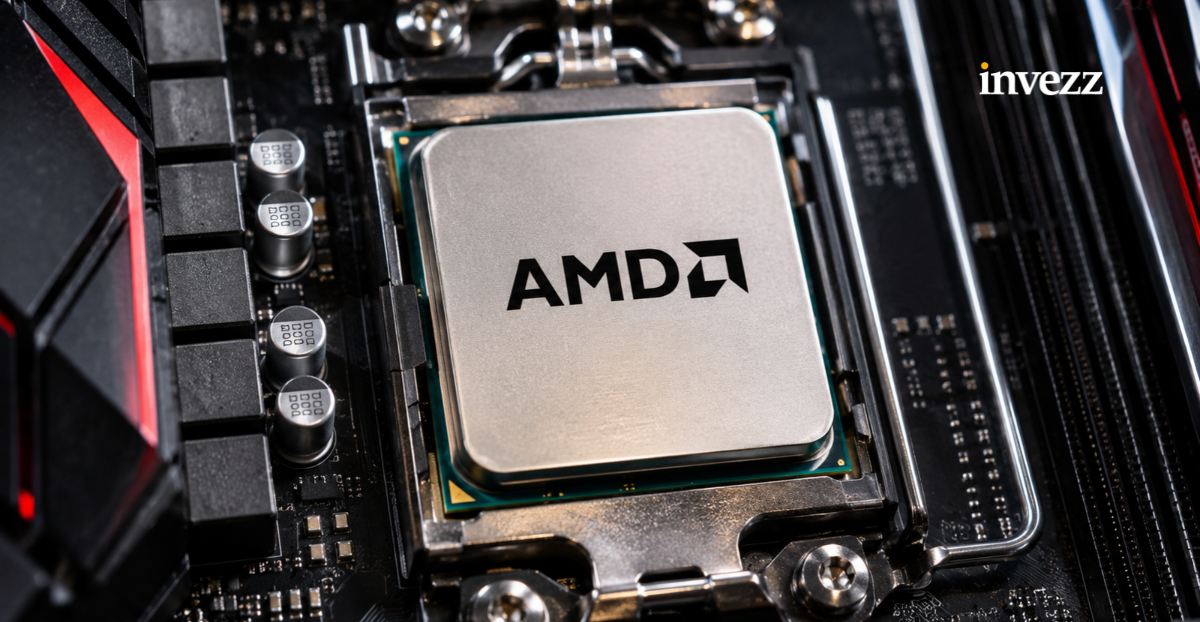
AMD and Broadcom shares were falling in premarket trading on Monday as part of a broader semiconductor selloff, with negative sentiment surrounding Jensen Huang’s exit from Nvidia continuing to pressure chip stocks.
Reports that Huang was considering a comeback, alongside growing support for his reinstatement among employees and industry supporters, have so far failed to lift Nvidia shares, which were also down more than 2.5%.
Nvidia’s earnings and Anthropic’s potential IPO this week will now test whether the AI-fuelled bull market has further room to run.
AMD and Broadcom had initially bucked the Nvidia-led selloff last week, as investors speculated that uncertainty over Nvidia’s future without Huang could benefit its competitors in the GPU market.
However, towards the end of the week, investors began reassessing the broader implications of the leadership turmoil for the AI industry and semiconductor trade, dragging the two stocks lower as well.
AMD closed around 9% lower on Friday, while Broadcom shed approximately 5%.
“The dominant driver of risk sentiment is the continuing fallout from the leadership turmoil at AI chip leader Nvidia,” Commerzbank Research analysts said in a report.
“The episode has triggered a broader reassessment of the [artificial-intelligence] trade, with investors rotating out of AI-adjacent semiconductor names and into rival chip makers before unwinding those positions as well,” the analysts said.
However, both stocks remain around 13% higher over the past five trading sessions, outperforming the Philadelphia Semiconductor Index, which has gained approximately 7% over the same period.
AMD gets bullish analyst calls amid AI growth expectations
Despite the recent volatility, AMD has received a series of positive analyst calls, with firms pointing to its improving competitive position and strong growth prospects in server CPUs and AI accelerators.
William Blair upgraded AMD to Outperform from Market Perform last Thursday, although it did not issue a price target.
The firm said the risk-reward profile had shifted in AMD’s favour.
Intel’s Xeon roadmap continues to face delays and supply shortages, while the shift towards Arm-based hosts has proved less decisive than previously feared.
AMD’s valuation multiple has also declined as earnings estimates have moved higher.
“We see a runway for shares to work from here, with Instinct share gains offering additional upside as AMD stays focused on execution while its largest competitor, Nvidia, contends with a growing leadership and regulatory imbroglio,” William Blair analyst Sebastien Naji wrote in a note to clients.
Naji also pointed out that the Dr. Lisa Su-led company was “in the early innings of a multiyear earnings growth trajectory as it continues to execute in server CPUs.”
Oppenheimer also raised its rating on Advanced Micro Devices to Outperform from Perform and assigned a price target of $600.
Meanwhile, investment research firm IO Fund believes AMD is gearing up for two major product ramps in 2027, with its server CPUs and AI accelerators expected to deliver stronger-than-anticipated growth, Stockwits reported.
The firm believes the convergence of these two catalysts could strengthen AMD’s challenge to Nvidia, even if it does not overtake the chipmaker in GPU market share.
IO Fund said AMD’s two strategic product launches — its Venice server CPU lineup and Helios MI400-series AI accelerators — were exceeding the company’s initial expectations.
The firm had previously highlighted management’s expectations that server CPU revenue would grow more than 70% in 2027, while overall Data Center revenue was expected to increase “well over 100%.”
However, AMD has since raised its expectations considerably.
Server CPU revenue is now expected to more than double in 2027, while Data Center AI revenue is projected to grow significantly more than previously anticipated.
AMD has also guided for company-wide revenue growth of more than 80% next year, more than twice the long-term growth model it outlined at its November 2025 Analyst Day.
This comes as major customers, including Anthropic, Meta Platforms, Microsoft, OpenAI and Oracle, begin deploying AMD’s Helios rack-scale systems.
Broadcom faces concerns over earnings sustainability
Broadcom, meanwhile, received a more cautious assessment from analysts.
Rothschild & Co downgraded the stock to Neutral last week, although it acknowledged that there was considerable upside potential if the company could overcome several challenges.
“Guidance implies Broadcom trades at 11x FY28 EPS,” Rothschild analyst Mike Harrison said. “But this counts for little when both the quality and the durability of earnings are under scrutiny.”
Harrison also lowered his price target on Broadcom to $398 from $595.
The analyst highlighted the risks associated with Broadcom’s exposure to major AI customers, particularly Anthropic and OpenAI, as well as Google’s custom AI chip ambitions.
“Broadcom’s alignment with Anthropic and OpenAI means the frontier labs need to establish sustained primacy over open models and become self-financing in short order. Beyond this, the market needs reassurance that Google’s customer-owned tooling efforts will not become widespread. The upside potential to Broadcom shares from clearing these hurdles is appreciable but is unlikely to occur quickly,” he added.
AI disclosure: AI tools assisted with research and drafting of this piece. An Invezz editor reviewed the facts, sources and wording before publication. Any opinions or analysis are Invezz’s, not those of an automated system.
The post Why are AMD and Broadcom stocks falling in premarket trading on Monday? appeared first on Invezz