
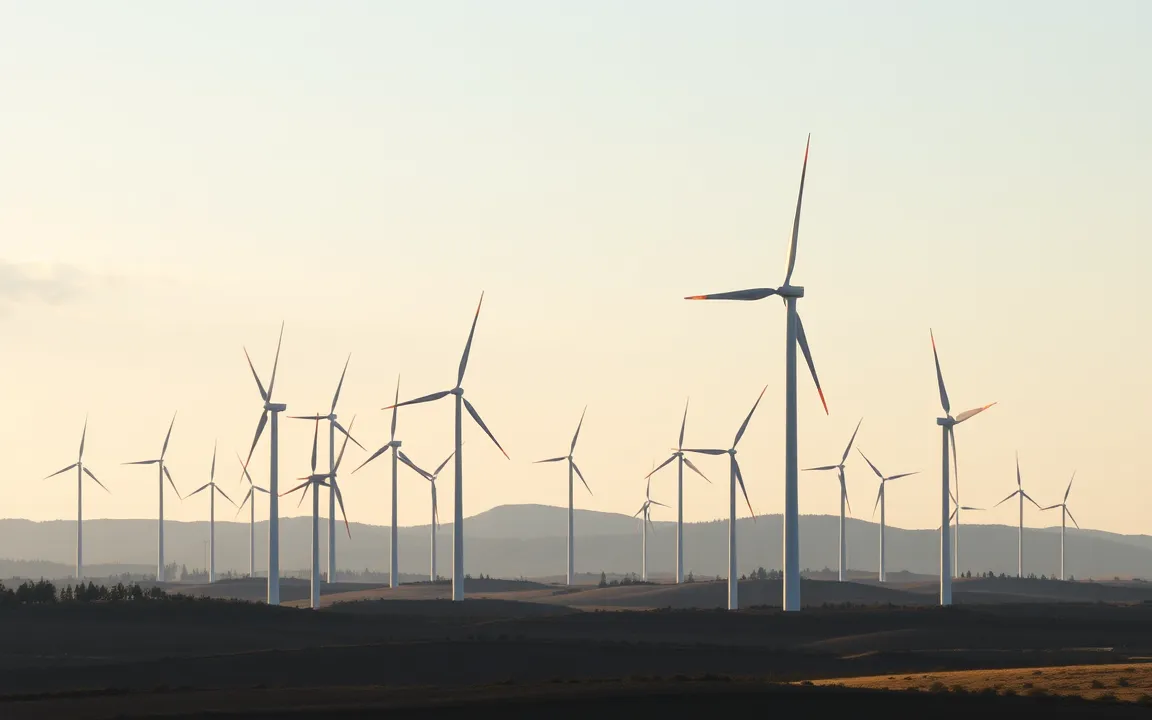
Europe’s push to expand offshore wind capacity is colliding with a structural supply crunch, as turbine prices soar and market concentration deepens.
A new analysis from Rystad Energy warns that the region’s post‑2030 targets risk slipping out of reach unless policymakers and developers address bottlenecks in the turbine value chain.
Siemens Energy, parent of Siemens Gamesa, has rallied nearly 20% year‑to‑date on hopes of offshore pricing power, while Denmark’s Vestas Wind Systems has climbed about 15% as demand for its 15 MW turbines accelerates.
By contrast, GE Vernova, recently spun off from General Electric, has stumbled, with its stock under pressure after pausing new offshore orders due to technical setbacks.
Concentration and rising costs
GE Vernova, Siemens Gamesa and Vestas have long anchored Western offshore turbine supply.
But with GE Vernova pausing new offshore orders after technical setbacks, Siemens Gamesa and Vestas now account for virtually all turbines available to European developers.
This narrowing of supply has coincided with sharp price increases.
Rystad Energy notes that turbine selling prices have risen by 40–45% since 2020, far outpacing manufacturing cost increases of 20–25%.
“The market has moved into structurally tight territory: high demand, limited supplier diversity and rising turbine complexity,” said Sander Baksjoberget, senior analyst, offshore wind research at Rystad Energy.
“That combination gives OEMs real pricing power and the ability to be selective about which projects get built.”
Shares of Siemens Energy, parent of Siemens Gamesa, have been volatile in recent months, reflecting investor concerns over supply chain pressures.
Vestas Wind Systems stock has held steadier, though analysts caution that rising input costs could weigh on margins.
GE Vernova, recently spun off from General Electric, has seen its valuation pressured by offshore setbacks.
Nacelles and blades under strain
The supply crunch is most acute in nacelles and blades the most complex and critical components of modern turbines.
Nacelles house the generator, gearbox and power electronics, while blades are growing longer and more difficult to manufacture and transport.
“Europe’s offshore ambitions are real, and the pipeline reflects genuine political commitment,” Baksjoberget added.
But if Europe doesn’t meaningfully expand Western manufacturing capacity or rethink how supply constraints are addressed in its auction frameworks, it won’t deliver its post‑2030 targets at the pace or cost the energy transition requires.
By contrast, towers remain comparatively flexible, with a broader supplier base and lower barriers to entry.
This uneven distribution of supply pressure is reshaping the balance between developers and manufacturers.
Bigger turbines, bigger challenges
The mix of turbines delivered between 2020 and 2027 illustrates how quickly the market has shifted.
Earlier years were dominated by 9–10 MW models, while recent deliveries are increasingly in the 14–15 MW class.
Siemens Gamesa was first to sign contracts for its 14 MW model, later moving into the 15 MW class.
Vestas followed with its V236‑15 MW, which gained traction from 2024 onward.
This shift toward larger, more complex turbines has fueled price increases.
“The turbines being built and installed today are significantly larger and more complex than those from five years ago, and that complexity is reflected in what OEMs can charge,” Rystad noted.
Contract reset and developer burden
The sharp rise in turbine prices since 2020 cannot be explained by costs alone.
During 2020–2021, manufacturers were locked into contracts that assumed stable input costs.
When inflation surged in 2021–2023, OEMs absorbed the losses through margin compression.
As those contracts expired, prices reset sharply.
Developers now face higher turbine prices and tighter contract terms, while manufacturers recover margins on newer deals.
Suppliers are now in a stronger position to pass a larger share of future cost increases through to developers via higher turbine prices and stricter contract terms.
Outlook
Rystad’s modeling shows that a 30% increase in selected input categories would raise total manufacturing costs by roughly 17%, underscoring how different components are exposed to different cost drivers.
The report concludes that Europe’s offshore wind sector is entering a period of structural tightness.
Without expanded manufacturing capacity or policy adjustments, developers may struggle to deliver projects at scale and cost levels envisioned for the energy transition.
For investors, the message is clear: turbine makers like Siemens Gamesa and Vestas hold pricing power, but face margin pressures from scaling next‑generation technology.
Developers, meanwhile, must navigate higher costs and constrained supply as Europe’s offshore ambitions collide with industrial realities.
The post Rystad warns of Europe’s wind crunch; Siemens Gamesa, Vestas shares rise appeared first on Invezz