
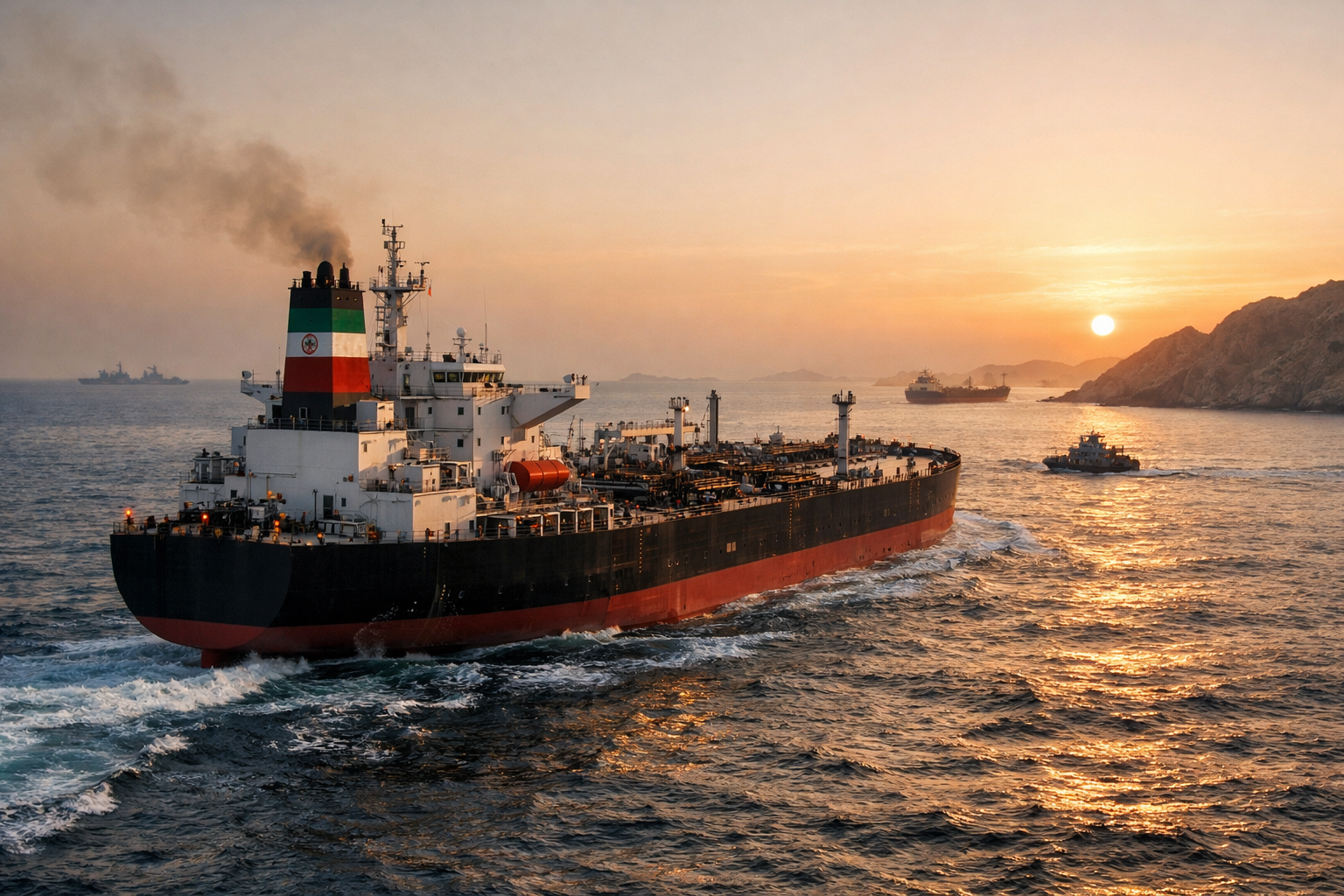
Iran’s tightening grip on the Strait of Hormuz has left global energy markets and shipping in turmoil, with The Financial Times reporting that a full reopening of the waterway in 2026 is unlikely.
Instead, countries such as India, China, Japan, and South Korea may be forced into bilateral deals with Tehran to secure passage, while legal and political disputes over Iran’s maritime claims deepen.
Energy and shipping disruption
According to The Financial Times, maritime traffic through the Strait of Hormuz has collapsed by more than 90% from pre-conflict levels, as insurers withdraw coverage and war-risk premiums soar.
The chokepoint, which normally carries about 20% of global oil and LNG flows, has become nearly inaccessible to Western-flagged vessels.
Moody’s has warned that Asian importers will likely negotiate bilateral transit corridors with Iran, possibly through routes near Larak Island or via Omani waters, but a return to pre-war traffic volumes this year is improbable.
The BBC has highlighted the human cost of the blockade, noting that thousands of crew members remain stranded as shipping companies reroute vessels around Africa’s Cape of Good Hope.
These detours add up to two weeks of extra travel time and nearly 40% more fuel consumption, sharply raising costs for global trade.
Legal scrutiny of Iran’s claims
The Week examined Iran’s justification for controlling Hormuz, pointing out contradictions in its selective use of international law.
While Iran signed the United Nations Convention on the Law of the Sea (UNCLOS), it never ratified it, allowing Tehran to deny obligations on transit passage while still claiming economic benefits such as exclusive rights over natural resources.
Legal experts argue that Iran’s unilateral interception of ships violates customary international law, which guarantees non-suspendable transit through international straits.
The article also noted that Iran’s actions overlap with Oman’s territorial entitlements, making unilateral control legally untenable.
Attempts to levy transit fees or suspend passage are inconsistent with UNCLOS provisions, which prohibit charging tolls for natural straits. Analysts describe Iran’s stance as “cherry-picking” international law to justify coercive behavior.
Political and military dimensions
Iran’s push to consolidate control has been accompanied by aggressive tactics.
Reports from maritime outlets describe mine-laying, drone attacks, and fast-boat harassment by the Islamic Revolutionary Guard Corps (IRGC).
The Financial Times noted that Iran’s leaders are betting that political pressure in the US and nervous regional allies will push President Donald Trump toward a deal, even if unfavorable.
Meanwhile, US naval forces have enforced a blockade since April, disabling Iranian tankers and clashing with IRGC units.
The International Maritime Organization estimates that 1,500 ships and 20,000 crew members have been stranded due to hostilities.
Gulf nations and the UN have warned that instability in Hormuz threatens global trade and energy security.
India’s dilemma
For India, the crisis is particularly acute. As one of the world’s largest oil importers, New Delhi faces rising energy costs and inflationary pressures.
Analysts cited by The Financial Times expect India to negotiate directly with Iran for safe passage, but such deals could expose it to geopolitical risks and complicate relations with the US and Gulf allies.
India has already suffered casualties, with The Week reporting that an Indian sailor was killed in March when an IRGC drone boat attacked the MKD VYOM.
Two other Indian-linked vessels were targeted in April, underscoring the vulnerability of non-combatant shipping.
Outlook
The Financial Times concludes that a full reopening of Hormuz in 2026 is unlikely, with only incremental improvements possible through bilateral arrangements.
Analysts warn that even if limited corridors emerge, they will remain fragile, opaque, and vulnerable to disruption.
Legal experts stress that Iran’s selective adherence to international law sets a dangerous precedent, undermining global norms of free navigation.
Politically, Tehran’s brinkmanship may strengthen its negotiating hand but risks alienating regional neighbors and escalating tensions with Washington.
For India and other Asian economies, the challenge will be balancing immediate energy needs with long-term strategic interests. As the crisis drags on, the Strait of Hormuz remains both a symbol of Iran’s defiance and a flashpoint for global instability.
The post Iran’s control of Strait of Hormuz raises legal issues; reopening unlikely appeared first on Invezz