
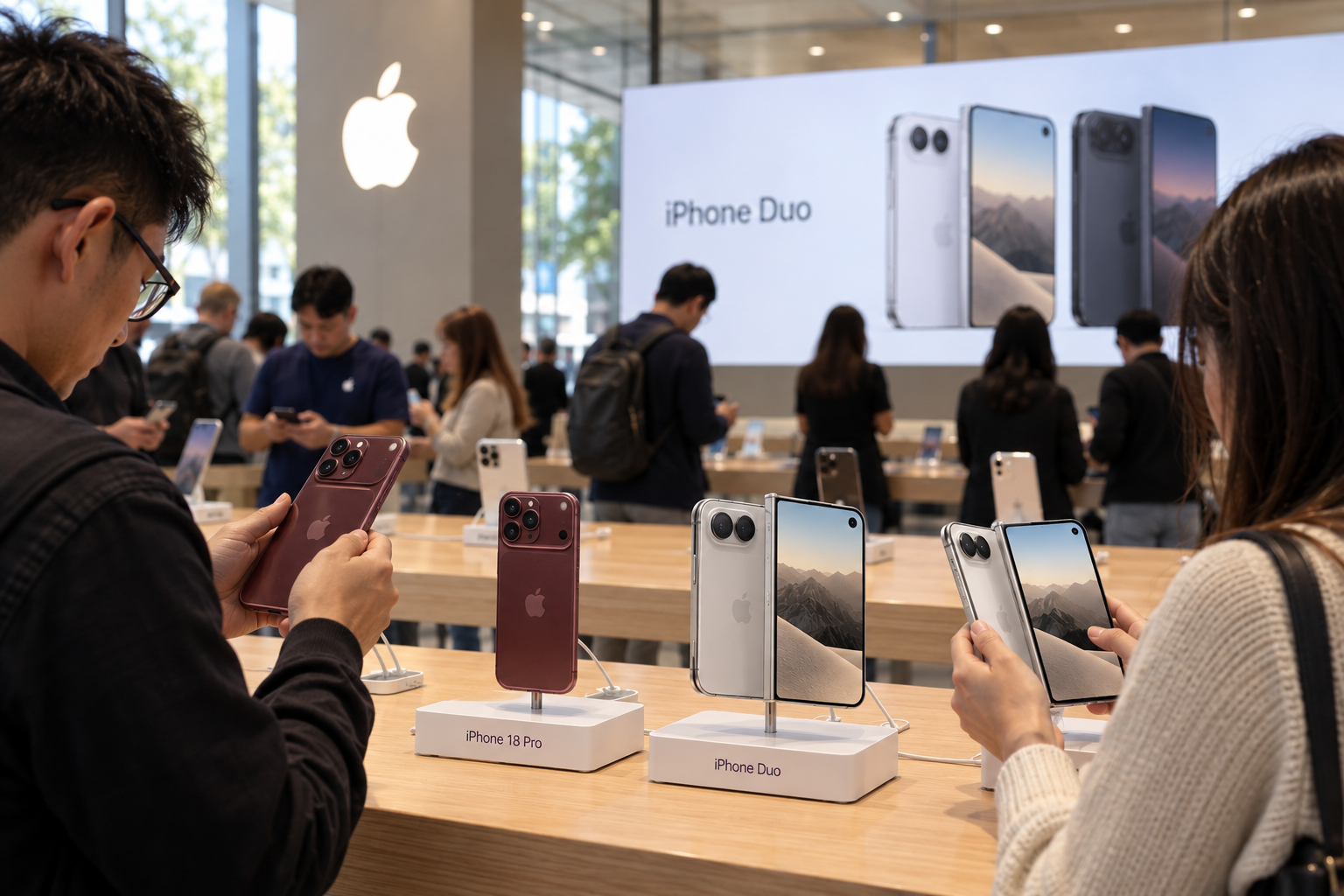
Apple stock (NASDAQ: AAPL) hit a fresh record as strong demand for its first foldable iPhone fuelled hopes of an upgrade cycle, even as analysts warned that manufacturing constraints could limit the gains.
The stock touched $351.73 on Friday before closing at $347.73. Apple’s $1,999 iPhone Duo, which went on sale on October 23, sold through initial supplies with some delivery estimates stretching into January.
Apple has reportedly asked suppliers to raise orders by 30%. But longer waiting lists, rising component costs and an expensive valuation have left Wall Street divided over how much of that excitement can reach earnings.
Apple’s iPhone Duo frenzy drives the rally
The Duo gives Apple a new way to persuade customers to pay more for their next phone. Its folding display combines a compact handset with a larger screen, bringing Apple into a premium category already occupied by rivals.
Taiwan’s Economic Daily reported that the company requested a 30% production-order increase after preorders surpassed available stock.
Apple also raised a 12-month production target by 44% to 14 million devices, from 9.7 million. The figures cover different measures and neither is confirmed company guidance.
Dan Ives, a partner at Yorkville Ives, described demand for the Duo as “running well ahead of supply out of the gates”, according to CBS News.
Ives maintains an Outperform rating and a $400 price target, roughly 15% above Friday’s close. He expects premium upgrades to support sales beyond the launch, potentially lifting average selling prices further.
Yet preorder queues do not establish final shipment volumes. The challenge is delivering enough phones to turn the initial excitement into revenue without allowing customers to lose patience.
Apple stock: Why a sell-out may signal production trouble
Long delivery estimates can indicate strong appetite for a product, but can also reveal how difficult it is to manufacture.
JPMorgan analyst Samik Chatterjee said waits exceeding three months were partly driven by “supply ramp challenges,” according to StreetInsider.
Wall Street has reduced its estimated 2026 Duo shipments to eight million to nine million units from 10 million, even as Chatterjee argues that current order patterns suggest demand may already exceed those projections. He kept an Overweight rating and a $360 target.
The manufacturing process is unusually demanding. Supply-chain accounts suggest Foxconn’s final-assembly yield was slightly above 60% in September, although Apple has not confirmed that figure.
A low yield means more devices fail quality checks, raising production costs and slowing shipments.
Foldable displays and hinges add further complexity. Apple must improve those yields quickly to meet demand during the holiday season.
Apple could benefit from the Duo’s higher selling price, but that advantage shrinks if assembly inefficiencies and costly components eat into gross margins.
Wall Street questions how much optimism is priced in
Loop Capital offered the clearest warning when analyst Ananda Baruah downgraded Apple to Hold from Buy on October 20, cutting his price target to $330 from $370.
His supply-chain checks suggested Apple would not recover 13 million iPhone shipments previously removed from second-half plans. Loop now forecasts 79 million December-quarter shipments, below Wall Street’s 85 million estimate.
The brokerage also flagged rising memory costs and reduced its normalised earnings estimate to $11 a share from $12.
“The stock also requires a fundamental catalyst reset after its recent stock appreciation,” Baruah said, according to Investing.com.
Apple reports fiscal fourth-quarter earnings on November 2, but the September-ended period will not include Duo sales. Investors will instead examine iPhone 18 demand, profit margins and management’s guidance on increasing foldable production.
The post Apple stock hits record as iPhone Duo demand soars, but Wall Street warns appeared first on Invezz